
How hiring a humanoid robot works, from D-30 to event day
Published on 12 October 2026 · By Salomon Cordebar
Hiring a humanoid robot for a trade show, a grand opening or a corporate party is not a matter of having a machine delivered a few hours before doors open. A well-prepared service is generally built in four stages: framing the objective around D-30, technical validation of the venue between D-15 and D-7, preparation of the running order and teleoperation in the final week, then set-up, operation and breakdown on the day. The floor, access routes, power supply, movement area, set-up times, badges, scenario and everyone's responsibilities must be checked in advance. On the day of the event, the robot is run by a trained operator who adapts its movements to the reality of the venue and the density of the crowd.
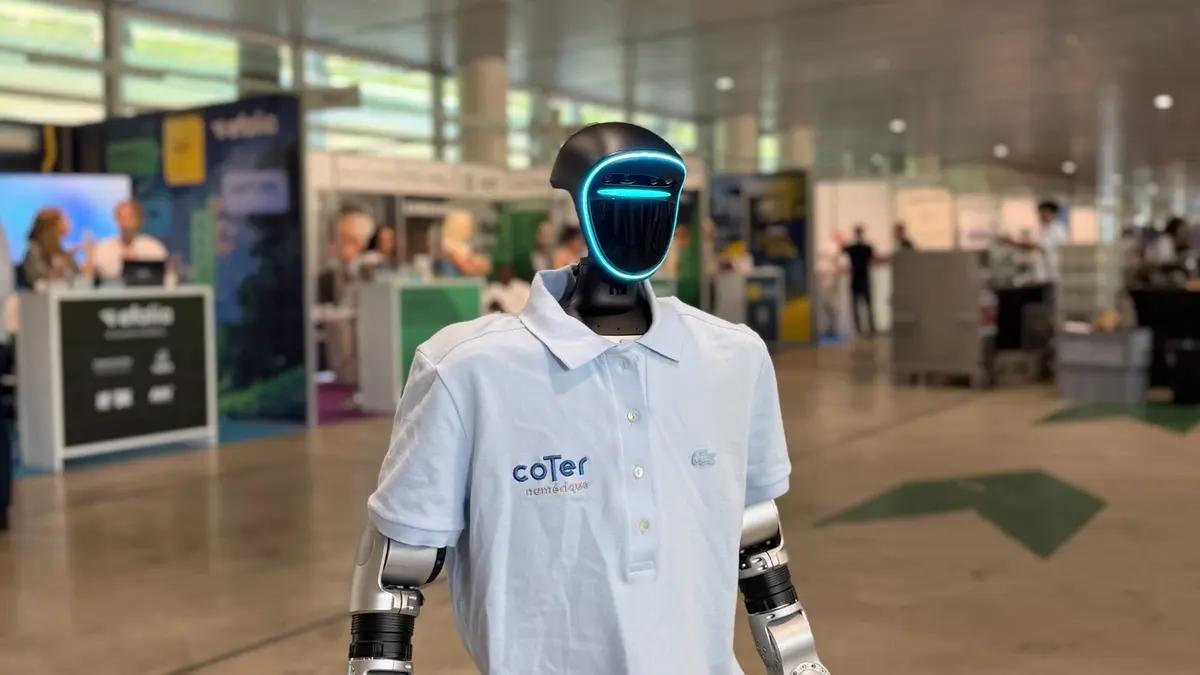
The full timeline of a humanoid robot hire
A service can be prepared quickly when the venue and the scenario are simple. But, for comfortable working, a lead time of two to four weeks allows constraints to be dealt with before they become problems on the day.
| Period | What is prepared | Objective |
|---|---|---|
| D-30 to D-15 | Objective, audience, venue, schedule, sequences and contacts | Define what the robot really needs to produce during the event |
| D-15 to D-7 | Floor, access, power, movement area, insurance, badges and logistics | Check that the service is technically feasible |
| D-7 to D-1 | Running order, movements, coordination with the production team and rehearsal | Turn the idea into a workable sequence |
| Event day | Set-up, tests, teleoperation, sequences, packing away and breakdown | Deliver the service under controlled conditions |
This timeline is a preparation framework: it can be tightened when the venue, access and scenario are simple and already documented.
The logic is simple: the earlier the important decisions are made, the less the team has to improvise on site. The timeline holds whichever hire package is chosen: half day, full day or bespoke service; what mainly changes is the level of preparation and scripting.
D-30 to D-15: frame the objective before talking technology
The first question is not 'what can the robot do?'. The right question is: at what moment do we want to focus the audience's attention, and what should happen straight afterwards? At a trade show, the robot can for example appear at opening time, move along an aisle at set times, create a regular rendezvous in front of the stand or accompany a speech.
At a corporate party or a grand opening, its role may be different: welcoming guests, appearing at a precise moment, a short walkabout or a transition between two parts of the event. At this stage, the useful information to gather includes:
- the exact address of the venue;
- the hall, stand or space concerned;
- the hours of presence and the actual public opening hours;
- the number of sequences wanted and their approximate duration;
- the type of audience expected and the level of attendance;
- the contacts on the client, organiser and production sides;
- any brand content, gestures or speeches to be included.
This is also when the choice is made between a simple presence and genuine event scripting. A simple presence may consist of having the robot appear several times during the day, walk and interact briefly with visitors. A scripted sequence, by contrast, has a beginning, an identifiable action and an exit. The audience understands that a particular moment is taking place.
This distinction matters: a robot left permanently on view quickly ends up becoming part of the scenery. Shorter, identifiable appearances make it possible to recapture attention on a regular basis.
D-15 to D-7: check the venue, access and movement area
Once the objective is defined, the question becomes technical. The provider generally asks for recent photographs of the venue, a floor plan or, where necessary, a site visit. The aim is not to complicate the organisation: it is to identify in advance anything that could prevent or degrade the service.
The floor. A bipedal humanoid needs a surface compatible with its walking. The checks include:
- that the floor is sufficiently flat and stable;
- the absence of unanticipated steps, and any changes in level;
- cables crossing the area;
- thick or poorly secured rugs;
- slopes and particularly slippery surfaces;
- temporary obstacles likely to be installed on the day itself.
The final route does not necessarily need to be long. A few properly controlled metres are better than a large area that is hard to manage. A starting point, a movement area and a fallback area also need to be planned.
Access. The robot has to reach the place where it will be used. That means checking parking and delivery conditions, the access routes imposed by security, door dimensions, the presence and dimensions of lifts, the route between unloading and the stand or room, and the times during which that route is permitted.
At a trade show, logistical constraints can be greater before and after opening than during the event itself. Exhibitor or contractor badges, technical access and the set-up and breakdown slots therefore need to be checked early enough.
Power and preparation. Even when a robot runs on battery during its sequences, a power supply is still needed for its preparation and recharging periods.
- an accessible power socket;
- a space away from public circulation for the equipment;
- a sufficiently protected preparation area;
- a usable path between that area and the performance space.
The human environment matters as much as the physical one. You need to know who will be reachable during set-up, who can make a decision if the running order has to be changed and who the operator communicates with if there is a problem. A fallback solution must also be planned: if an area that was initially clear becomes extremely crowded, if furniture is added or if the route is ultimately no longer usable, the team must be able to shorten or move the sequence rather than try to maintain a scenario that no longer fits.
The documents requested depend on the venue and the organiser. A certificate of professional liability insurance may in particular be among the items requested. The exact requirements must always be confirmed with the organiser, the venue manager and, where the subject calls for it, the relevant professionals.
D-7 to D-1: turn the idea into a workable sequence
One week before the event, the question is normally no longer what we would like to do. It is to determine exactly how the sequence will begin, unfold and end. For each appearance, the running order can specify:
- the time or the trigger cue;
- the robot's starting point;
- the planned route;
- the maximum duration;
- the person who gives the start cue;
- any speeches;
- the music or content played;
- the exit point.
When the robot appears during a speech, a piece of music or another stage element, coordination with the production team becomes essential. A gap of a few seconds between the robot, the microphone and the music can be enough to make a sequence hard to follow.
Simple movements often work better than an endless demonstration. A technically complex movement is not automatically a good movement for an event. The audience must be able to understand it immediately. A few short, well-spaced and clearly visible gestures are generally easier to read than a succession of rapid movements, and the surroundings must always be taken into account.
In Libella Robotics services, the humanoid robot is run on a teleoperation basis. This means that a human operator directs the robot and continuously watches its surroundings.
- slightly alter the route;
- slow the robot down;
- wait for a person to move;
- interrupt a movement;
- temporarily cancel a sequence.
This ability to adapt is essential at an event, because the real environment is never completely fixed. Where possible, an on-site rehearsal validates the starting point, the route, the distances, the travel times and the synchronisation with the other teams. If an on-site rehearsal is not possible, a run-through can be carried out from the floor plan, videos of the venue and the running order.
Before the day, three responsibilities must be perfectly clear: who decides, who speaks to the audience and who makes sure the area stays usable.
Event day: set-up, operation and breakdown
On the day of the service, the team arrives before the moment the robot is due to be seen by the public. The aim is to have a period during which checks can be carried out without pressure. Once on site, the team checks the equipment and then powers up.
The route is tested under the actual conditions of the day. A pass at reduced speed makes it possible to check in particular:
- the starting point;
- the distances;
- obstacles that have appeared since preparation;
- the stopping point;
- access to the fallback area.
The client-side lead, the production team and the operator can then hold a final briefing. The times, the start cues and the conditions under which a sequence might be cancelled are gone over again.
During operation, the robot does not necessarily have to run continuously. Spaced-out appearances create several rendezvous over the course of the day and leave time between sequences to prepare the next one. During each appearance, the operator teleoperates the robot and watches what is happening around it.
The running order remains a reference, but it is not followed blindly. If attendance increases, the route can be shortened. If a cable or a piece of furniture appears in the area, the path is changed. If a person comes too close during a movement, the robot can be stopped. Between two appearances, the robot returns to its preparation area to handle the necessary checks and recharging without these becoming a visible part of the experience.
At the end of the service, the robot is switched off and checked. The equipment is packed away and then removed in line with the times and the logistics route set by the venue. At some trade shows, it is impossible to bring in a vehicle or move bulky equipment before a set time: this point must therefore have been anticipated from the preparation stage.
- identify the sequences that worked best;
- note the constraints encountered;
- plan useful adjustments for a future service;
- identify any images produced whose reuse is authorised.
What must be decided before event day
Preparing a humanoid robot hire can be summed up in a fairly short list.
| Topic | Question to have settled |
|---|---|
| Objective | Why is the robot appearing, and when? |
| Venue | Are the floor and access compatible? |
| Logistics | How does the equipment get to the area? |
| Power | Where can the robot and equipment be prepared and recharged? |
| Route | What are the starting point, the path and the fallback area? |
| Sequence | What exactly does the audience see? |
| Production | Who gives the cue and how do the teams coordinate? |
| Teleoperation | Who operates, and under what conditions is the sequence interrupted? |
| Breakdown | When and by which access does the equipment leave? |
This grid is used to check the operational points before the team arrives on site.
The complexity therefore does not come from the robot alone. It comes above all from integrating it into an event where visitors, exhibitors, technical teams, furniture and other entertainment are already circulating. Serious preparation consists precisely in making that complexity disappear from the audience's point of view.
The visitor should simply see a robot that appears at the right moment, moves naturally within the planned space and creates an interaction that makes sense. To discover the different service formats, the humanoid robot hire page presents the main packages offered by Libella Robotics. For a trade show event, the humanoid robot for trade shows page covers that use in more detail. To compare robot families before choosing, see also which robot for your event?.
Frequently asked questions
How long does it take to prepare a humanoid robot hire?
A lead time of around two to four weeks gives a comfortable framework for preparing a service: defining the scenario, checking the venue, logistics, access, coordination and rehearsal. A simpler service can be organised at shorter notice when the venue and conditions are already known.
Does the humanoid robot work on its own during the event?
No. In Libella Robotics services, the robot is teleoperated by a trained operator, who controls its movements, watches the surroundings and adapts or interrupts a sequence when conditions require it.
Which aspects of the venue need checking before the service?
The checks include the type of floor, steps and slopes, cables, the width of access routes, lifts, the power supply, the preparation area and the space available around the robot.
Is an on-site rehearsal always necessary?
It is particularly useful when the robot has to appear alongside music, a speech, a production team or a precise route. When an on-site rehearsal is not possible, preparation can be carried out from floor plans, photographs, videos of the venue and a detailed running order.
What happens if the venue is more crowded than expected?
The operator adapts the route, shortens the sequence or interrupts it when the surroundings no longer allow it to be carried out in good conditions. The scenario must be flexible enough to be adjusted to the reality of the event.
Author
Salomon Cordebar
CEO and co-founder of Libella Robotics
Co-founder of Libella Robotics, he operates the company's Unitree G1 humanoid robot hire services at professional events in France.
LinkedIn profile